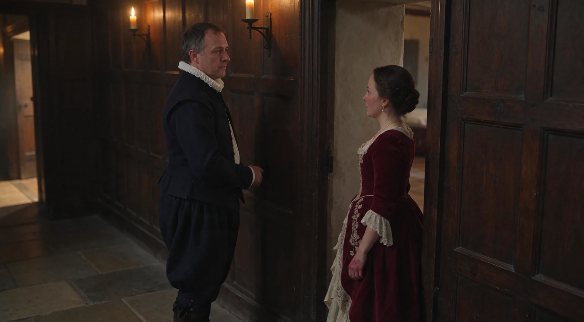
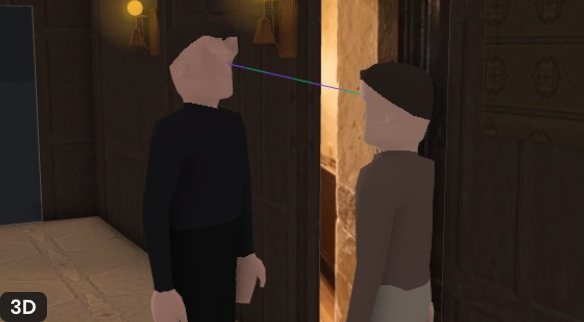
In Higgsfield you learn a shot is wrong after you have paid for it. In Filmustage Studio the scene is built in 3D first, so the room, the cast and the cameras are checked before any video is generated.
The 3D plan and the frames are included. You approve the board, then pay for video once.
The script breakdown briefs every shot. Nothing to tag, lock or re-describe for each angle.
The reverse angle is the same room from the other side, because it is the same 3D set.
Scenes of any length, cut in an editor and joined into a film. Not 30 seconds at a time.
Higgsfield published a consistency walkthrough: one character, one kitchen, five shots, 20 seconds at 1080p. Their note on the result: it “took 3 attempts”. This is that receipt, next to the same clip made from a plan.
Two of three takes, 640 credits, were spent finding out what was wrong. Reference images for the elements are extra. Higgsfield’s article
Everything their takes were checking, light direction, objects, surfaces, the character, is decided before video. If one shot is still off, you re-shoot that shot, not the clip.
The honest arithmetic. A second of video costs more with us: 45 coins at 1080p against their 16 credits, on plans where $49 buys about 1,000 of either. It is the same video model on both sides, Seedance 2.5, so the difference is price, not quality. One of our takes costs about what three of theirs do. Their own example needed three; G2 reviewers describe the same pattern, one writing that a gaze error “means I have to regenerate the scene and use more credits”. The plan is what keeps you at one take, and it is where the hours go too: no establishing shot to make, no prompt to write per angle, no checklist per take.
The left column is Higgsfield’s published workflow. The right is ours.


These are the failure modes Higgsfield’s own guides name, and what prevents each one in a plan.
Each character is a separate asset standing in a separate place in the set.
The plan records who wears what and who holds what, per scene.
Heights are dimensions of the stand-ins, not a line in a prompt.
Assets are shared across the project; episode 40 uses the same ones as episode 1.
Higgsfield has a 3D tool too, and it tells you something. 3D Jutsu builds a scene from a prompt with grey proxy geometry and stock Mixamo characters, and their consistency guide recommends it “for layouts that must match exactly”. It is a standalone workspace: it does not start from a script, your characters are added separately as references, and nothing checks continuity for you. In Filmustage Studio the 3D set is not a separate tool. It is built for every scene from the breakdown, with your cast and props already in it.
Failure modes: Higgsfield, two consistent characters in one scene and consistency across an animated series. 3D Jutsu: Higgsfield’s own description.
Higgsfield’s column comes from their product page, blog and launch release, plus one independent pricing review, as of November 2026.
| Higgsfield Cinema Studio | Filmustage Studio | |
|---|---|---|
| Starts from | A prompt and settings: genre, camera, pacing, cast | A script or an idea, broken down into scenes |
| How a character stays the same | Character element or Soul ID (20–80 photos), tagged in each prompt | Asset with fixed face and build, placed in each scene’s set; looks per scene |
| How a location stays the same | Location element from an establishing image | 3D set built per scene, lit per scene |
| 3D | 3D Jutsu: separate workspace, scene from a prompt, proxy geometry | Every scene, from the script, with your cast and props |
| Camera | Described in the prompt, with # tags for moves | Placed in 3D: lens, height, tilt, heading, shown on every frame |
| Continuity check | Manual, against the establishing shot | In the plan, before rendering |
| Review before paying for video | Each take is charged | Frames from the plan’s cameras, included |
| Fixing one bad shot | Edit Video for part of a clip, or regenerate | Re-shoot that shot with a note, or move its camera in 3D |
| Length | 30-second multi-shot scenes; longer pieces are split and joined | Any: shots per scene, scenes per film |
| Editing | “No timeline, no post” | Built-in editor, Full Cut, export to Premiere, Final Cut, DaVinci |
| Unused credits | Reset at renewal | Roll over while subscribed |
| Beyond the video | — | Breakdown, schedule, budget and call sheets from the same scenes |
| Models | You choose the engine per shot; access depends on the plan, and the $19 Starter plan excludes Seedance 2.5 | Always the current top models, chosen for you: Seedance 2.5 for video, Seedream 5.5 for frames and assets, on every plan |
| Price of a second of video | 3 credits at 480p, 7 at 720p, 16 at 1080p | 8 coins at 480p, 18 at 720p, 45 at 1080p |
| Resolution and sound | Native 4K; speech, effects and music generated with the video | 480p draft, 720p, 1080p; voiced table read |
| Looks and effects | 50+ colour grades, camera bodies and lenses, eras, an emotion wheel | Style and direction by settings or voice |
| Existing footage | Extend or edit uploaded video up to 30 s | Not yet; creates from a script or idea |
Sources: Higgsfield, How to Keep Characters and Locations Consistent Across AI Shots (workflow, Soul ID, worked example: 16 credits a second, 320 a take, 960 for three, about $47 at $49 per 1,000 credits); Cinema Studio product page (“No timeline, no post”, native 4K); Cinema Studio 4.0 launch release, 28 Oct 2026 (30-second scenes, 50 references, native audio, Edit Video, Extend); Aliteq, Cinema Studio 4.0: Features, Cost (credits per second, Seedance 2.5, Starter plan excludes it); Krea, a Higgsfield competitor, on credit expiry; G2 reviews (4.5/5 from 96 reviews; quote by Lauren H.). Higgsfield’s features and prices change often; check their site. Filmustage Studio figures are beta rates: 45 coins a second at 1080p, $49 per 1,000 coins. Higgsfield is a trademark of its owner; this page is not affiliated with or endorsed by Higgsfield.
Tell us what you are making and we will open Filmustage Studio on your account in one of the next groups.
Not per second: 45 coins at 1080p against about 16 credits, on plans where $49 buys roughly 1,000 of either. It is cheaper per finished scene when Higgsfield needs three or more takes, which is what their own published example took. The plan, the frames and the continuity check are included, so the checking happens before video.
It removes the per-shot work Higgsfield’s method needs: making an establishing shot, saving elements, writing a prompt with tags and locks for every angle, and comparing each take by eye. In Filmustage Studio the breakdown briefs the shots and the plan places the cameras.
Yes, a separate tool called 3D Jutsu that builds a scene from a prompt with proxy geometry and stock characters. It does not start from a script and does not check continuity. In Filmustage Studio every scene has a 3D set, built from the breakdown with your cast, props, cameras and light.
Higgsfield trains a Soul ID from 20 to 80 photos, and screens every generation for real faces and protected content. In Filmustage Studio you attach photos and they become a character asset.
For one clip, Higgsfield is fast and has more looks, effects and generated sound. For a spot where the product has to match across six to ten shots and several versions, see Filmustage Studio for ads.
Yes. The beta is live and open to everyone: sign in at app.filmustage.com and start your first project. Pricing is at beta rates for now.